

When buying an electric bike, one of the biggest choices is whether to choose a fat tire electric bike or a regular tire electric bike. Both options can be useful, but they are designed for different riders and different road conditions.
The best choice depends on where you ride, how much comfort you want, and whether you need extra stability for mixed terrain.
What Is a Fat Tire Electric Bike?
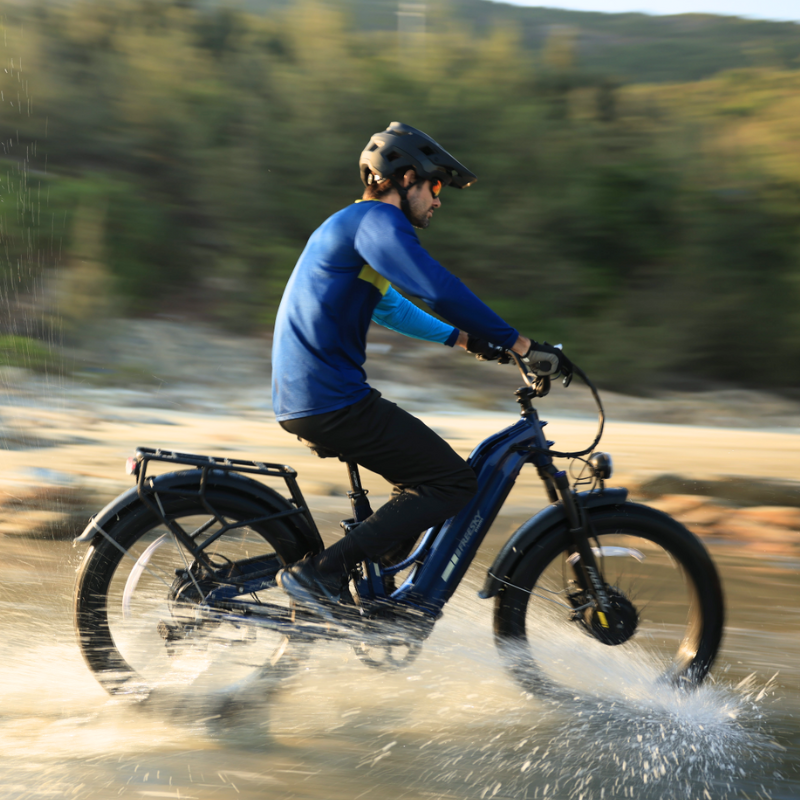
A fat tire electric bike uses wider tires than a regular bicycle or commuter e-bike. These tires create more surface contact with the ground, which can improve stability and comfort.

Fat tire e-bikes are popular for:
- Gravel roads
- Light snow
- Sand
- Dirt paths
- Trails
- Rough pavement
- Comfortable city riding
Because the tires are wider, they can absorb more road vibration and give riders a more stable feeling.
What Is a Regular Electric Bike?
A regular electric bike usually has narrower tires designed for pavement, city streets, and daily commuting. These bikes are often lighter and more efficient than fat tire models.
Regular e-bikes are popular for:
- City commuting
- Smooth pavement
- Bike lanes
- Short trips
- Lightweight riding
- Easier storage
If most of your riding is on paved roads, a regular tire e-bike may feel faster and easier to handle.
Comfort Comparison
Fat tire electric bikes usually provide a more comfortable ride because the wider tires absorb bumps better. This is useful on rough roads, gravel, trails, and uneven pavement.
Regular electric bikes can still be comfortable, but they may transfer more vibration from the road to the rider.
Winner for comfort: Fat tire electric bike.
Stability Comparison
Fat tires provide more ground contact, which improves stability. This can help new riders feel more confident, especially on loose surfaces or rough roads.
Regular tires feel more agile and responsive, but they may not feel as stable on gravel, snow, or uneven surfaces.
Winner for stability: Fat tire electric bike.
Speed and Efficiency
Regular electric bikes are usually more efficient on paved roads because the tires create less rolling resistance. This can help with range and speed on smooth surfaces.
Fat tire e-bikes may use more energy because the tires are wider and heavier. However, many fat tire models include larger batteries to support longer rides.
Winner for paved-road efficiency: Regular electric bike.
Winter and Snow Riding
For Canadian riders, winter conditions can be an important factor. Fat tire electric bikes are often better for light snow and mixed winter conditions because the wider tires provide better surface contact.
However, riders should always be careful in winter. Ice, deep snow, and low visibility can still be dangerous.
Winner for light snow and winter stability: Fat tire electric bike.
Commuting
For city commuting on smooth roads, regular electric bikes are efficient and easy to ride. They may be lighter, easier to carry, and easier to store.
For commuting on rough roads, broken pavement, gravel paths, or winter streets, a fat tire e-bike may be more comfortable and stable.
Winner for smooth city commuting: Regular electric bike.
Winner for rough-road commuting: Fat tire electric bike.
Off-Road and Trail Riding
Fat tire electric bikes are better for trails, dirt paths, gravel, and mixed terrain. The wider tires provide better grip and control.
Regular electric bikes are usually not ideal for rough off-road conditions unless they are specifically designed as mountain e-bikes.
Winner for trails and mixed terrain: Fat tire electric bike.
Which One Should You Buy?
Choose a fat tire electric bike if you want:
- More comfort
- Better stability
- Better performance on rough roads
- Better light snow capability
- Mixed-terrain riding
- A strong all-purpose e-bike
Choose a regular electric bike if you want:
- Lighter weight
- Better efficiency on pavement
- Easier city commuting
- Easier storage
- Faster handling on smooth roads
Why TEX EBIKES Offers Fat Tire Models
TEX EBIKES focuses on practical electric bikes for Canada and the USA. Many riders need comfort, stability, and strong performance on different road conditions. Fat tire electric bikes are a strong choice for riders who want one bike for commuting, weekend riding, trails, and rough pavement.
All TEX EBIKES models are UL 2271 and UL 2849 certified for battery and electrical system safety.
Final Thoughts
A fat tire electric bike is best for riders who want comfort, stability, and versatility. A regular electric bike is best for riders who mainly use smooth roads and want a lighter, more efficient ride.
For Canada and the USA, where road conditions can vary by season and location, fat tire e-bikes are a strong choice for all-around riding.
FAQ
Are fat tire electric bikes better?
Fat tire electric bikes are better for comfort, stability, rough roads, gravel, light snow, and mixed terrain. Regular e-bikes may be better for smooth pavement and lightweight commuting.
Are fat tire e-bikes harder to pedal?
They can feel heavier than regular bikes because of the wider tires, but the electric motor helps reduce the effort.
Are fat tire e-bikes good for commuting?
Yes. Fat tire e-bikes are good for commuting, especially on rough roads, winter streets, or mixed terrain.
Do fat tire e-bikes use more battery?
They may use more battery than regular tire e-bikes because of extra rolling resistance, but battery size and riding style also matter.
Are fat tire electric bikes good for winter?
They can be better than regular tires for light snow and uneven winter roads, but riders should avoid icy or unsafe conditions.
Share:
How Far Can a 30Ah Electric Bike Battery Go?