

Buying your first electric bike can feel confusing. There are many models, battery sizes, motor ratings, tire types, brake systems, and price ranges. This electric bike buying guide explains the most important things beginners should know before choosing an e-bike.
The right electric bike should match your riding style, local roads, budget, and comfort needs.

Step 1: Decide How You Will Use the E-Bike
Before comparing specs, decide your main riding purpose.
Common uses include:
- Daily commuting
- Weekend recreation
- Trail riding
- Campus transportation
- Delivery work
- Replacing short car trips
- Riding with less physical effort
- Winter or mixed-terrain riding
A commuter may need efficiency and comfort. A trail rider may need fat tires and suspension. A delivery rider may need a larger battery and strong brakes.
Step 2: Understand Battery Size
Battery size affects range. Larger batteries usually allow longer rides, but range depends on many factors.
Important range factors include:
- Rider weight
- Terrain
- Speed
- Pedal assist level
- Throttle use
- Temperature
- Tire pressure
- Cargo weight
If you plan to ride daily or travel longer distances, choose a larger battery. If you only ride short distances, a smaller battery may be enough.
Step 3: Compare Motor Performance
The motor helps with acceleration, hills, and riding effort. More power can be useful for heavier riders, hills, cargo, or rough roads.
However, motor power should match local laws and riding conditions. Buyers should always check local e-bike regulations before riding.
Step 4: Choose the Right Tires
Tires affect comfort, stability, and efficiency.
Fat tire electric bikes are good for:
- Rough roads
- Gravel
- Light snow
- Dirt paths
- Stability
- Comfort
Regular tire electric bikes are good for:
- Smooth pavement
- City commuting
- Faster handling
- Lighter weight
- Better efficiency
For Canada and the USA, fat tire models are popular because they handle changing road conditions well.
Step 5: Check the Brakes
Brakes are one of the most important safety features on an electric bike. E-bikes are heavier than regular bicycles, so strong braking is important.
Hydraulic disc brakes are often preferred because they provide strong stopping power and smoother control.
Step 6: Look at Comfort Features
Comfort matters, especially if you ride often.
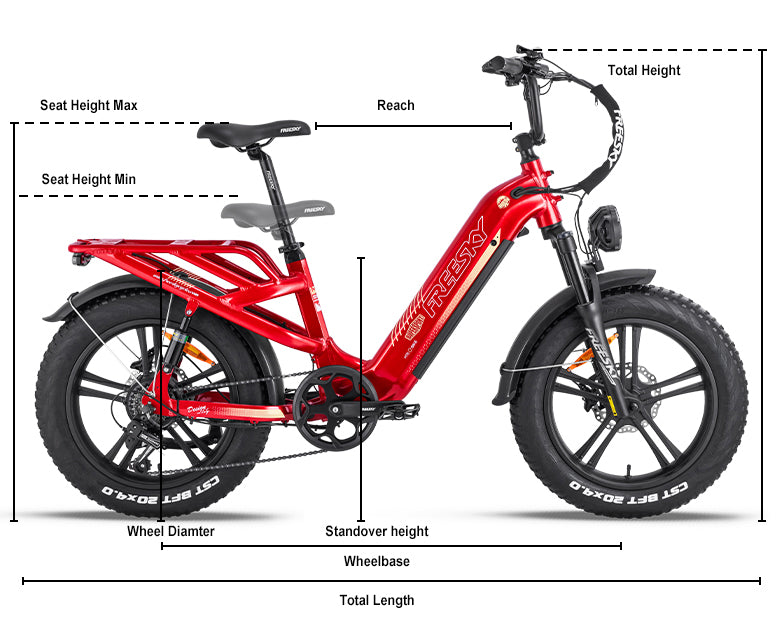
Look for:
- Comfortable saddle
- Proper frame size
- Adjustable seat
- Stable handlebars
- Suspension
- Fat tires
- Ergonomic grips
- Step-through frame if needed
A comfortable e-bike is more likely to be used regularly.
Step 7: Review Safety Certification
Electric bikes use lithium-ion batteries and electrical systems, so certification matters.
All TEX EBIKES models are UL 2271 and UL 2849 certified.
UL 2271 covers battery safety. UL 2849 covers the e-bike electrical system, including the battery, charger, motor, controller, wiring, and related components.
For beginners, choosing a certified e-bike provides extra confidence.
Step 8: Check Shipping, Warranty, and Support
Before buying, review the company’s support policies.
Check:
- Shipping area
- Delivery time
- Return policy
- Warranty coverage
- Assembly instructions
- Replacement parts
- Customer service contact
- Damage claim process
A cheaper e-bike is not always better if support is weak.
Step 9: Understand Assembly
Most electric bikes arrive partially assembled. Buyers may need to install the front wheel, handlebar, pedals, seat, or accessories.
For safety, we recommend professional inspection before the first ride, especially for brakes, wheels, drivetrain, and electrical connections.
Step 10: Match the Bike to Your Budget
When comparing price, look beyond the sticker price. Consider:
- Battery size
- Brake quality
- Motor performance
- Tire quality
- Warranty
- Certification
- Shipping cost
- Replacement parts
- Long-term reliability
A better-built e-bike can save money over time.
Beginner Recommendation
For most beginners, a good first electric bike should have:
- Comfortable riding position
- Reliable brakes
- Strong battery range
- Stable tires
- Clear display
- Good warranty
- Safety certification
- Easy support access
If you ride mixed terrain, rough roads, or Canadian seasonal conditions, a fat tire electric bike can be a smart choice.
Final Thoughts
Buying your first e-bike is easier when you focus on the right features. Start with your riding purpose, then compare battery size, motor performance, brakes, tires, comfort, warranty, and safety certification.
A good electric bike should make riding easier, safer, and more enjoyable.
FAQ
What should a beginner look for in an electric bike?
Beginners should look for battery range, reliable brakes, comfort, correct size, safety certification, warranty, and customer support.
Is a fat tire e-bike good for beginners?
Yes. Fat tire e-bikes can be good for beginners because they provide stability, comfort, and confidence on different surfaces.
How much battery do I need for an e-bike?
It depends on your riding distance, terrain, weight, speed, and assist level. Larger batteries are better for longer rides and daily commuting.
Are electric bikes hard to assemble?
Most e-bikes require basic assembly. Professional inspection is recommended before riding.
Are TEX EBIKES good for beginners?
Yes. TEX EBIKES models are selected for practical performance, comfort, safety certification, and support for riders in Canada and the USA.
Share:
How Far Can a 30Ah Electric Bike Battery Go?
Best Electric Bike for Commuting in Canada